
Action 2 · Inclusivity

Leaving no child behind
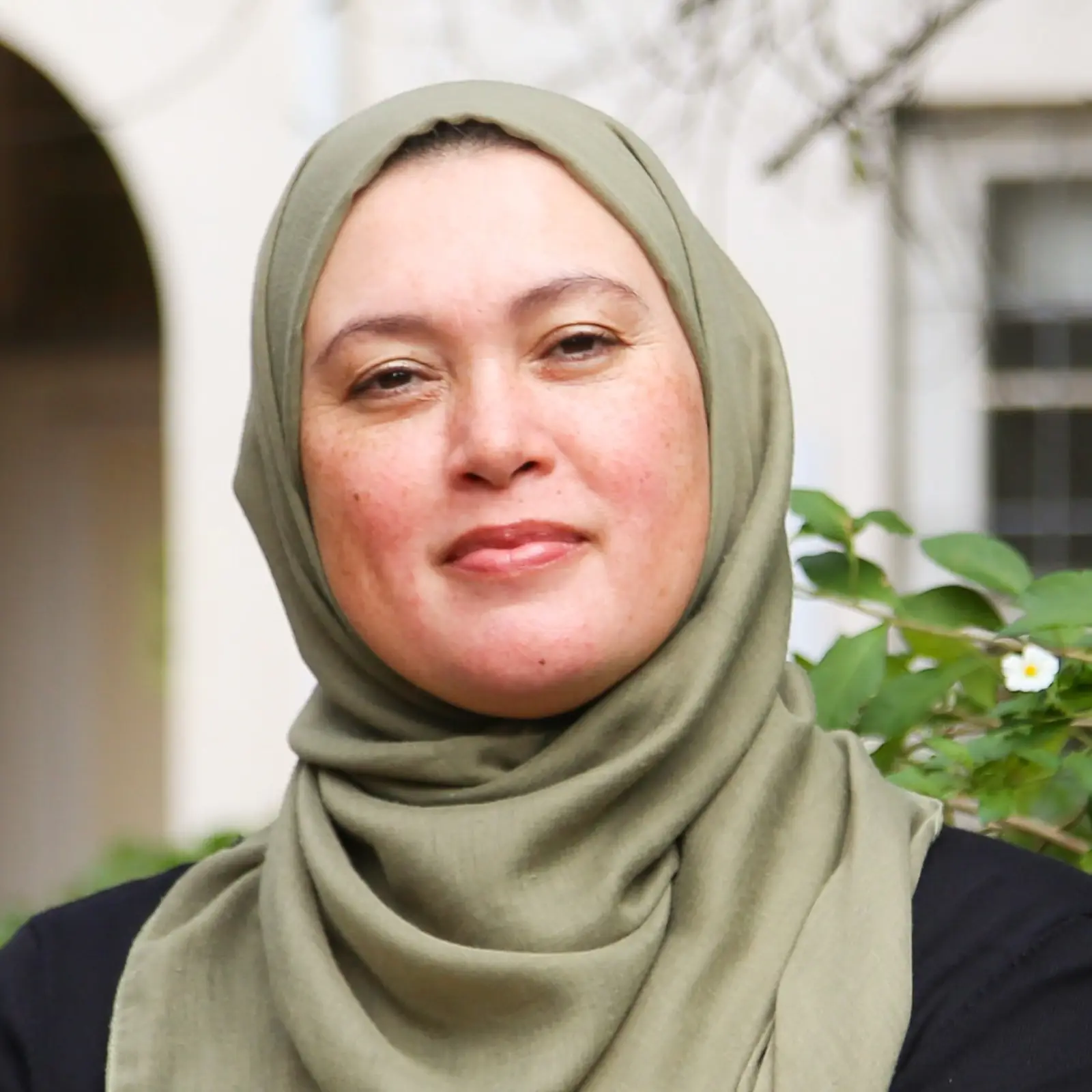
In conversation with Wiedaad Slemming, Associate Professor and Director of the Children’s Institute at the University of Cape Town. She leads Action 2 of the Bana Pele Shared Blueprint, which aims to create services, policies and pathways that let every child participate meaningfully from the start.
6 min read

Q: When we talk about an inclusive early learning system, what should that look like for a child and a family?
The word inclusion has come to mean different things to different people. In education, it is often associated first with disability, but it is much broader than that. It is about any child who experiences a barrier to learning.
And it’s important to remember that inclusion starts from birth. It does not begin when a child enters school or even when they enter an early learning programme. That is why we have to think across health, education, social development and other services that shape a child’s life from the very beginning.
“Participation is a precondition for inclusion, because if you’re participating, you’re also included.”
Q: You make an important distinction between a child being present in an early learning programme and genuinely participating. Why does that matter?
Inclusion is not a new idea, but it hasn’t really shifted the needle for children in South Africa in a significant way. So we have been asking how to make inclusion real, and we are introducing the idea of participation.
A child can be present in a programme, taking part in activities and enjoying them with other children their age. That is one form of participation, but it is a very passive kind. What we hope for is children meaningfully engaging in activities and learning opportunities, with the caregivers in their lives involved too. That might be at home, in a playgroup or in a programme, wherever a child normally spends their day.
Participation is a precondition for inclusion, because if you’re participating, you’re also included. But if you only think about inclusion, you don’t get to that meaningful engagement, which is what we are really trying to achieve.
Q: What are some of the areas we need to strengthen to make that possible?
We need to think about the whole journey of a child. For very young children, the health system is often the first point of contact. That is where developmental concerns may first be identified, where referrals happen and where families begin accessing support. Later, the child may move into an early learning programme or into the education system.
The difficulty is often in those transitions. A child may be identified and referred, but then need an assessment. Those specialists are few and far between, and the waiting lists can be extremely long. When children move from one part of the system to another, continuity of support can break down. Children in that period are particularly vulnerable and can fall through the cracks.
Q: Your work argues that inclusion needs to be built into the system, rather than added afterwards. What does that mean in practice?
For a long time, we have been stuck in a cycle of wanting to retrofit or add on. I have been involved in developing different policies, including the National Integrated ECD Policy, and the pattern is often the same. A policy is developed, and then someone realises that children with disabilities haven’t been mentioned, so those words are added to make sure all children are covered.
That is not enough. If you are building universal policies, you’ve got to start with the children who are the most vulnerable and the most at risk of being marginalised. If you are creating and developing with that in mind, nobody will get excluded.
Inclusion cannot sit alongside the system as a separate programme or intervention. It has to be built into the way policy, leadership, data, funding, workforce and local delivery are designed. We call these the six levers for strengthening the ECD system.
“You’ve got to start with the children who are the most vulnerable and the most at risk of being marginalised.”
Q: How do the six levers work together to make inclusion possible?
Those levers were developed to strengthen the ECD system as a whole, and all of them are equally important for inclusion.
Start with policy. We need to fill some gaps and do some fine-tuning, but policy is not necessarily our biggest challenge. It is about how we make these policies real. That is where leadership and coordination come in. This work already sits in multiple places in the system, and the task is to bring it together more cohesively, so that people are not doing similar things in parallel without really working together. Funding matters too: if you fund only at the basic level, your funding models do not account for the additional support some children need.
We also have to avoid being overwhelmed by the scale of what is needed. This is an incremental process, and we build towards it. That is why the focus on participation and on the individual child matters so much. Even without extra practitioners, you problem-solve to see how it can work for that child and that family.
Q: Who needs to be part of shaping that system?
We tend to speak to the same people: the people we know and the people who are already part of these conversations. We have tried to be intentional about bringing in other voices, including people with lived experience and people working in different parts of the system who ordinarily would not make it into boardroom conversations. For our initial engagements, we have invited mothers and caregivers, people already working in ECD environments and people from different parts of the health system.
That matters because, however universal the principles and approaches, what we are ultimately trying to influence is an individual child’s journey and the life of that child’s family. The voices of the people living it every day need to be part of the conversation.
Q: The first stakeholder engagement takes place at the Bana Pele Leadership Summit. What are you hoping to get from it?
The work is already under way, and this is the first time we are engaging people outside our core team. Many people are not yet aware of the Bana Pele process, so part of this is introducing what we are trying to do. But we also want peer review from people with rich experience and expertise of their own. Are we approaching this the right way? Who are we leaving out?
One of the tools we want to use is journey mapping, following the journey of a child with additional support needs through health, education and other systems. At the end of the day, it’s one child and family that needs to be living this journey through multiple systems at the same time. So how can we think about that together?