
Chapter
Chapter 04: Building Momentum in Stages
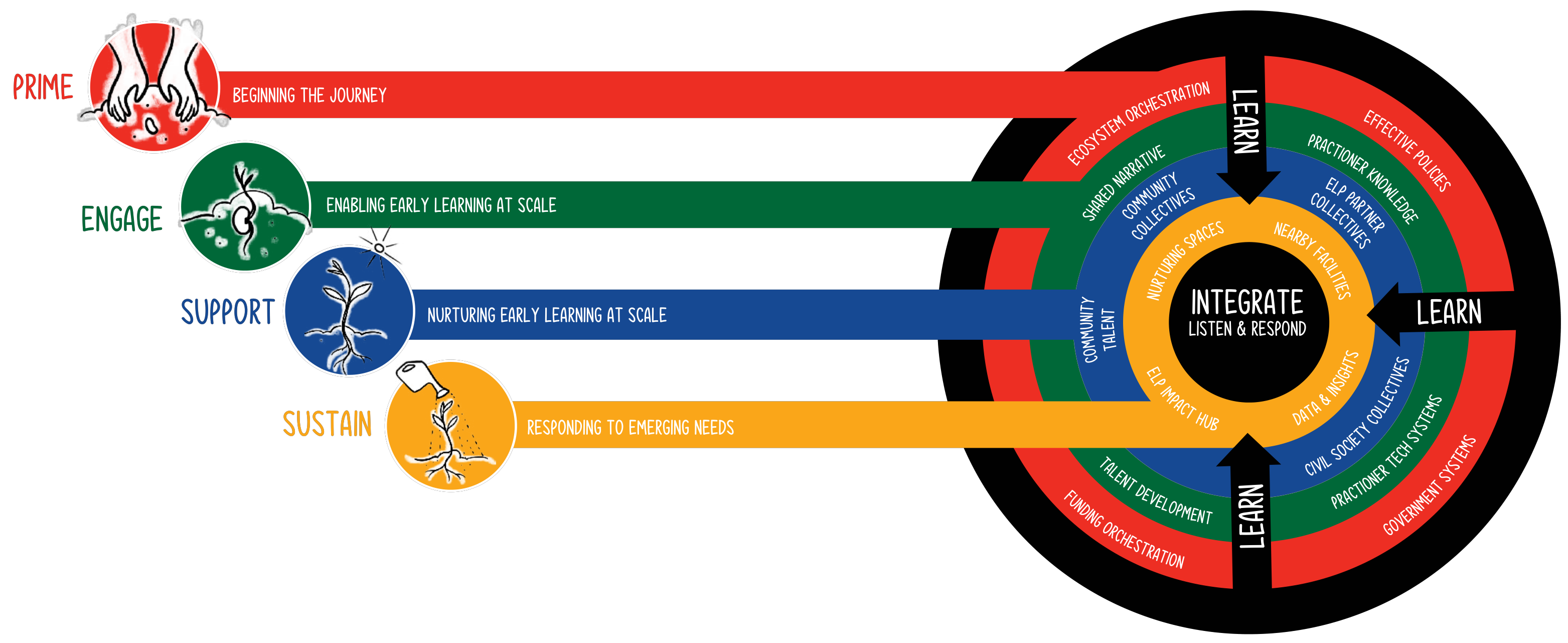
Delivering system-wide change at speed and scale requires a clear roadmap. This Blueprint builds on existing progress by introducing five overlapping stages of implementation: Prime, Engage, Support, Sustain and Integrate. Each stage builds on the previous one while overlapping with others. Think of them as waves, later stages begin before earlier ones are complete, creating momentum and accelerating progress.
Each stage is supported by priority actions that connect strategy to on-the-ground delivery and align all ecosystem actors.
4.1PRIME: BEGINNING THE JOURNEY
South Africa’s early learning transformation is well underway. The DBE, in collaboration with the ECD sector, has started building the policy, administrative, financial and collaborative foundations needed to scale delivery and realise the 2030 vision.
That commitment was reaffirmed at the first Bana Pele Leadership Summit in March 2025, where President Cyril Ramaphosa stated: “We recognise today that investing in ECD is not just about education. It is about shaping the next generation of skilled, capable and entrepreneurial citizens who will drive our economy forward.”
This Prime stage is characterised by increased public investment, a growing focus on data and evidence as well as new delivery mechanisms to strengthen reach and readiness across all spheres of government. Collectively, these efforts are setting the stage for the subsequent phases of rollout, ensuring the system is ready to expand equitably and with quality.
4.1.1ECOSYSTEM ORCHESTRATION
Delivering system-wide change at speed and scale begins with strong orchestration. Before new programmes can grow, the early learning ecosystem must be primed for collective action through stronger alignment, trust across all actors. The Government cannot act alone. Real transformation depends on distributed leadership and shared accountability across government, communities, civil society and the private sector.
ACTIONS IN PROGRESS
- Collaborative mechanisms, such as ECD Forums, bring community actors together to support and strengthen early learning centres. These need to be nurtured and their feedback integrated with future initiatives.
- At national and provincial levels, Intersectoral Forums (ISFs) provide platforms for joint planning between relevant departments and sector partners responsible for delivering holistic early childhood development. Rooted in the National Integrated ECD Policy (2015), these forums play a key role in fostering multi-sector collaboration and accountability.
- The Bana Pele Project Management Unit (PMU) has demonstrated a new kind of working partnership between state and non-state actors, focused on shared design, implementation and learning.
- Annual convenings such as the Bana Pele Leadership Summit energise government and ecosystem partners around shared goals.
ACTIONS TO BE ORCHESTRATED
- ACTION 1: DBE to appoint a leadership orchestration team, with a deep understanding of the network and initiatives, to support the orchestration of all Blueprint actions. In support, a small, agile secretariat will be set up to coordinate these initiatives. This would ensure momentum while creating space for new voices and capabilities within the system.

FIVE STAGES OF IMPLEMENTATION
4.1.2EFFECTIVE POLICIES
Coherent, enabling policy frameworks are the bedrock of large-scale reform. Recent efforts have aligned national direction with local realities and eased regulatory barriers for early learning provision across South Africa.
Foundational frameworks such as the National Integrated ECD Policy (2015) and the National Curriculum Framework for Children from Birth to Four continue to guide the delivery of inclusive, developmentally appropriate programmes.
To strengthen the enabling environment further, a number of critical reforms are already underway, focused on simplifying registration, reducing administrative burdens and improving coherence across government tiers.
ACTIONS IN PROGRESS
- Enacting the 2025 Children’s Amendment Bill will simplify and expand access to registration through mechanisms including conditional pathways, enabling more ELPs to enter, stay in and grow within the formal system.
- Updating the National Environmental Health Norms and Standards will streamline registration processes at the local level, making it easier for ELP providers to meet health and safety standards without undue administrative red tape.
- Rolling out the ECD Red Tape Reduction Toolkit will equip municipalities with practical tools to simplify regulatory processes, such as land use management, building control and compliance procedures that have historically created bottlenecks.
While these reforms represent major gains, several important policy gaps remain. One critical area for further attention is inclusion.
ACTIONS TO BE ORCHESTRATED
- ACTION 2: Strengthen existing systems and policies to improve access for children with additional support needs, including those with disabilities. This includes developing practical guidelines and implementation frameworks for early identification and assessment, adaptive learning strategies, supportive services and clear referral and care pathways, ensuring that all children can participate meaningfully in early learning.
4.1.3GOVERNMENT SYSTEMS
Transparent, responsive and well-integrated government systems underpin early learning support networks. Without them, efforts to expand access and improve quality cannot reach the scale or consistency required by the 2030 Strategy. Recognising this, the DBE and its partners have focused on modernising core business processes, improving data systems and testing new service delivery models to reach underserved communities. A well-integrated system will include local government as a critical lever.
ACTIONS IN PROGRESS
- Launched in 2024, the DBE’s Bana Pele Mass Registration Drive aims to simplify registration for thousands of previously unregistered ELPs. This framework reduces friction for both providers and district officials, especially in areas facing long-standing administrative bottlenecks.
- The drive has also served as a testing ground for new service delivery mechanisms, including the establishment of the Bana Pele PMU to execute the registration, support systems and subsidy payment support for ELPs.
- Complementing these reforms is the rollout of the Early Childhood Administration And Reporting System (eCARES), a digital platform designed to improve data availability, support informed decision-making and strengthen service delivery.
- Coordination across government departments is being further reinforced through the Heads of Education Departments Committee (HEDCOM) ECD Subcommittee, which meets quarterly to align national and provincial efforts and promote greater consistency in implementation.
- The Department of Cooperative Governance and Traditional Affairs (COGTA), the South African Local Government Association (SALGA) and municipalities will be essential in addressing regulatory barriers at the local level. Together with the DBE, they are launching a joint campaign to simplify processes and reduce red tape in the registration of ELP providers.
ACTIONS TO BE ORCHESTRATED
- ACTION 3: Deepen collaboration between Provincial Education Departments (PEDs) and local government through the Bana Pele ECHO Hub, a digital learning and networking platform. The initial phase of this platform should focus on Silver registration for ELP providers. This will strengthen the relationships between environmental health practitioners from local government and social workers from PEDs to enable the safe provision of early learning services in communities.
- ACTION 4: Publish open technology standards and guidelines to promote system interoperability across the ecosystem to reduce effort and improve cross-utilisation of systems managed by the network.
4.1.4FUNDING ORCHESTRATION
Achieving universal quality early learning requires substantial and sustained investment from both public and private sources. The DBE and its partners are building a coordinated funding environment blending public finance with philanthropic capital, donor contributions and catalytic funding from development partners.
ACTIONS IN PROGRESS
- The DBE has developed a 10-year plan to expand and sustain quality access through the ECD Subsidy. As a result, an additional R10 billion has been allocated to the subsidy over the 2025/26–2027/28 Medium-Term Expenditure Framework (MTEF).
- The DBE and its donor partners, in collaboration with the Development Bank of Southern Africa (DBSA), is piloting an independent Infrastructure Fund to support the maintenance and expansion of early learning facilities. Alongside this, the ECD Maintenance Grant remains the largest public infrastructure mechanism for ECD. Current reforms underway aim to ensure that all investments result in safe, healthy and developmentally appropriate spaces for children.
- The Early Childhood Care and Education (ECCE) Outcomes Fund is a promising example of results-based financing. Jointly capitalised by government and philanthropic partners, it blends over R300 million in public funds with R196 million in donor contribution to drive measurable improvements in access, nutrition and quality while enhancing accountability.
ACTIONS TO BE ORCHESTRATED
- ACTION 5: Explore innovations that enable the ECD Subsidy to work more strategically as a lever for improved outcomes, particularly for the most excluded children. This will involve testing approaches that strengthen quality, incentivise inclusion and ensure that public funding reaches the places where it can have the greatest impact.
- ACTION 6: Establish a co-financed Bana Pele Accelerator Fund to unlock and direct additional investment into new quality access. Designed as a catalytic mechanism supported by public and philanthropic partners, the Fund will invest in the accelerators required to expand access where it is needed most. It builds on lessons from the ECCE Outcomes Fund but adopts a sharper focus on scale, aiming to go live by 2028 and drive the final push toward the 2030 goals.
- ACTION 7: Mobilise the ECCE Livelihoods Fund to support new early learning micro-entrepreneurs with start-up capital. Working alongside the Presidential Youth Employment Initiative (PYEI), the Department of Employment and Labour, the Jobs Fund, the BUSA Livelihoods PMU and others, this action will unlock the mix of finance, stipends and stimulus packages needed to lower barriers to entry and enable new ELP providers to launch and sustain viable businesses.
- ACTION 8: Form a dedicated funding orchestration team to coordinate the flow of resources across all capital sources, including public budgets, CSR, philanthropy and blended finance instruments. By aligning contributors and reducing fragmentation, this team ensures that investment reaches the areas of greatest need and supports coherent system strengthening. It will also design and test diversified tools such as blended finance mechanisms, development bank guarantees, microgrants and bridge financing for centres awaiting subsidies, etc.

4.2ENGAGE: ENABLING EARLY LEARNING AT SCALE
This stage equips both new and existing ELP providers with the tools to deliver high-quality, meaningful experiences for children at scale. As the primary point of contact with families, they influence developmental outcomes, build trust in early learning and influence how it is valued in communities. Many are also founders and small business owners, predominantly women, driving local economic growth. Their entrepreneurship should be recognised and enabled, with access to the business capabilities, training and quality-enhancing resources needed to help children thrive.
This phase has been characterised by a society-wide shared narrative, leveraging of early learning knowledge and practices, talent development and practical technology and tools that strengthen relationships and offer ongoing opportunities to learn, grow and adapt.
4.2.1SHARED NARRATIVE
A shared national understanding and appreciation of the value of early learning is essential for shifting perceptions and behaviours at scale. This narrative must be co-created, inclusive, jargon-free and resonate across diverse communities, cultures and generations. The DBE and its partners have taken initial steps to lay the groundwork for this shift.
ACTIONS IN PROGRESS
- The Bana Pele Campaign is a national effort to raise awareness about the importance of early learning and ECD programme registration.
- Nudging the Nation is a well researched foundational strategy document to shape the design of a broader communication and advocacy campaign.
ACTIONS TO BE ORCHESTRATED
- ACTION 9: Co-create a compelling societal narrative with workshops and convenings involving families, ELP providers, partners and community leaders. This is the foundation for the stories they tell one another about young children and must be grounded in listening, shaped by the real voices of those involved.
- ACTION 10: Commission creative agencies to develop user-friendly materials such as artefacts and relatable content that families, ELP providers, partners and community leaders can use to share and reinforce the narrative in local languages and contexts. In parallel, build a collaborative communication ecosystem that includes media partners and other platforms to amplify the narrative across programmes, channels and communities. The goal is to foster a unified and resonant understanding of early learning that is widely embraced, reinforced and reflected throughout the ecosystem.
4.2.2ELP PROVIDER KNOWLEDGE
South Africa’s early learning sector is rich in wisdom and tested approaches from early learning experts, educators, NGOs and community organisations working in diverse settings, especially under-resourced ones. Recognising and amplifying this expertise is essential to raising quality across the system and enabling scalable, context-responsive delivery.
ACTIONS IN PROGRESS
- The Early Learning Outcomes Measure (ELOM) provides a validated methodology for assessing whether young children are developmentally on track. Widely adopted by NGOs and implementation partners, ELOM has become a key tool for monitoring and evaluation in the sector.
- The Thrive by Five Positive Deviance Study has uncovered powerful insights into the practices and conditions that drive better outcomes for children, offering grounded, real-world evidence of what’s working, and why, in diverse South African contexts.
ACTIONS TO BE ORCHESTRATED
- ACTION 11: Launch a national knowledge-sharing initiative inviting open contributions from ecosystem actors. ELP providers, NGOs and content developers can share proven tools, resources and insights under open licensing models. A dedicated curation panel, which will need to be established, will review and benchmark submissions, endorse evidence-based, context-relevant content and offer guidance on what is ready to scale. This initiative will promote a culture of generosity, shared ownership and continuous peer learning.
4.2.3TALENT DEVELOPMENT
Early learning happens because of the people who show up each day with care, creativity and commitment. Whether running community-based centres, working in homes or volunteering in informal settings, these ELP providers shape the daily experiences that build the foundations for lifelong learning. Recognising their contribution means investing in their growth, supporting their wellbeing and creating more consistent pathways for development, so that they are equipped and affirmed in their role as trusted caregivers, educators and champions of children’s potential.
ACTIONS IN PROGRESS
- The DBE has initiated a National Human Resource Development Plan to strengthen support for those working in early learning.
- New tools are being developed and piloted, with strong support from partners, to aid implementation of the National Curriculum Framework For Children From Birth to Four. These include structured daily programmes and coaching resources that guide interactions between ELP providers and children, while allowing space for creativity and responsiveness.
- A national Quality Assurance and Support System (QASS) is being designed with defined quality standards and a practice-oriented assessment tool to help ELP providers reflect on and strengthen their work within real- world conditions.
ACTIONS TO BE ORCHESTRATED
- ACTION 12: Establish a multi-stakeholder capacity-building body to strengthen practitioner support. This body will create accessible pathways for a high-calibre and diverse network of ELP providers to start, grow and improve the quality of their early learning programmes, while ensuring that new standards do not create barriers to entry for aspiring practitioners.
4.2.4ELP PROVIDER TECHNOLOGY INFRASTRUCTURE
In a system as vast and diverse as South Africa’s, technology can be a powerful enabler, helping ELP providers feel less isolated, more connected and better supported in their daily practice. With the right design, digital tools can bring learning, guidance and real-time support closer to where care and teaching happen in classrooms, homes and centres across the country.
ACTIONS IN PROGRESS
- Platforms like PLAYSA offer free, bite-sized online learning modules for ELP providers to access knowledge and learning at their convenience and on their own terms. These modules provide practical guidance on daily routines and help reinforce foundational practices that shape children’s early experiences.
ACTIONS TO BE ORCHESTRATED
- ACTION 13: Create an ECD National Digital Backbone that supports the full development journey of ELP providers, from initial registration to gold-level excellence. This shared digital public infrastructure will integrate existing applications (such as ECD Connect, PLAYSA, Funda and Grow Giraffe, with emerging technologies to create a seamless, coordinated experience. This unifying backbone must also facilitate multiple pathways for ELP providers and entrepreneurs to connect with a network of peers, experienced coaches and relevant health and social support services, strengthening daily practice, improving programme quality and expanding reach.
- ACTION 14: Establish the Bana Pele Engagement Platform, building on the emerging multi-channel system developed through the Bana Pele Mass Registration Drive, which spans call centres, WhatsApp, USSD and fieldworkers, to enable sustained, two-way communication between ELPs and the DBE.
4.3SUPPORT: NURTURING EARLY LEARNING AT SCALE
If the Engage phase sparks potential, the Support stage sustains it. It moves from one-off transactions to lasting relationships recognising that ELP providers need more than tools and training to thrive. As business owners and miro-entrepreneurs, they flourish in ecosystems of care built on trust, shared wisdom and a strong sense of belonging.
From grandmothers’ lullabies and neighbourhood collectives to the spirit of ubuntu, South Africa’s cultural traditions provide the invisible scaffolding that holds early learning together. When communities embrace ELP providers as their own, early learning becomes more than a service, it becomes a shared responsibility and a mutual act of care.
Building on the foundations laid in the previous stages, this one focuses on creating the conditions for sustained energy and well-being of ELP providers through community-driven support. The goal is to cultivate a system that adapts to the changing needs of children, families and providers, one that is resilient, responsive and deeply rooted in local realities.
4.3.1COMMUNITY COLLECTIVES
Delivering early learning at scale is not just a technical task, it is a community mission. In many areas, the strength of the local response determines whether children are reached, ELP providers are supported and services reflect the lived realities of families. That’s why cultivating Community Collectives, locally rooted groups that foster care, accountability and collective action are essential.
ACTIONS TO BE ORCHESTRATED
- ACTION 15: Catalyse local Bana Pele Community Hubs to mobilise families, grassroots leaders and local champions around early learning as a shared community responsibility. These hubs will act as micro-networks that connect ELPs with the communities they serve, promote the vital role of families and providers in nurturing safe, stimulating environments and empower communities and families to embed early learning into the fabric of everyday life.
4.3.2ELP PARTNER COLLECTIVES
As South Africa shifts from isolated early learning successes to widespread impact, ELP Collectives, whether informal provider networks, regional associations or issue-based coalitions, become critical agents in driving transformation. These peer-to-peer networks can strengthen local support systems, spread effective practices and spark innovation. While many NGO partners have successfully networked ELPs, a significant number remain unconnected and would benefit from peer relationships.
ACTIONS TO BE ORCHESTRATED
- ACTION 16: Launch a Peer-to-Peer Club Network for ELPs, drawing on successful models already used by NGO support organisations. Open to all ELPs within communities, these clubs will foster local collaboration, shared learning and mutual support. As part of this effort the Bana Pele orchestration team will develop a recognition and reward programme, celebrating best practices that contribute to improved child outcomes.
4.3.3CIVIL SOCIETY COLLECTIVES
Civil society has long been a driving force for equity, policy influence and amplification of marginalised voices. Coalitions of NGOs, advocacy groups, academic institutions and service providers, bring deep sector knowledge, community credibility and a commitment to social justice that strengthens the entire early learning system.
As the system evolves, these collectives are well-positioned to play an even more strategic role, identifying barriers to inclusion, enhancing accountability and co-creating solutions rooted in lived experience.
ACTIONS IN PROGRESS
- The ECD Infohub is already providing a single digital entry point for early learning. By consolidating essential resources, such as subsidies, training opportunities and registration guidance, it helps ELP providers and families access support more easily. The platform also promotes transparency, informed decision-making and greater system accessibility.
ACTIONS TO BE ORCHESTRATED
- ACTION 17: Create a fast-track policy escalation process that allows collectives to raise urgent legal or regulatory concerns, especially those affecting child safety. A dedicated communication channel between the DBE, provincial and local governments would enable swift resolution through timely collaboration and coordinated action.
- ACTION 18: Promote the widespread and sustained adoption of community feedback mechanisms that amplify the voices of families, ELP providers and local partners, particularly in underserved areas. Feedback should be routinely shared with government and delivery partners, along with transparent updates on how it has shaped responses.
4.3.4COMMUNITY TALENT
South Africa’s communities are filled with untapped potential, from unemployed youth seeking purpose and livelihoods, to women caregivers and elders who already contribute care and support, often without recognition or pay. Many are already helping ELPs informally, while others are eager to step in but lack clear pathways, support or opportunities to do so. By valuing and unlocking this local talent, we can grow the early learning workforce, strengthen ELPs and promote both gender equity and economic inclusion.
ACTIONS IN PROGRESS
- Public employment programmes like the Social Employment Fund and Jobs Fund have shown how community members, particularly women, can play vital roles in supporting early learning. These models now need to be scaled and more intentionally aligned with the 2030 vision.
- The National Youth Development Agency (NYDA) and Youth Employment Services (YES), in partnership with the PYEI, are currently deploying 900 youth to support the Bana Pele PMU. These young workers are assisting ELPs and districts with mass registration and subsidy payment processes, extending the system’s reach while creating new livelihood opportunities for a new generation of early learning champions.
ACTIONS TO BE ORCHESTRATED
- ACTION 19: Launch the Open Bana Pele Network, to build a new pipeline of ELP providers. This will be a digital platform connecting new practitioners with curated resources for learning, service delivery and financing. This shared support system will unlock local capacity at scale, with a strong focus on enabling women and youth to access entrepreneurial and livelihood opportunities in the early learning sector. The platform should be designed to work seamlessly with SAYouth.mobi, South Africa’s largest network of work-seeking youth, to expand reach and make access to opportunities easier and more inclusive.

4.4SUSTAIN: RESPONDING TO EMERGING NEEDS
A resilient early learning sector is not built once, it is continually renewed. As circumstances change, we must listen, learn and adapt. This stage introduces the feedback loops, adaptive support systems and innovation mechanisms that keep the ecosystem responsive over time, building on the momentum of the Prime, Engage, and Support stages.
Sustaining progress is about more than preserving what works, it means nurturing an ecosystem that can detect where care is falling short and respond with practical, context-sensitive solutions. This requires reliable data, trusted spaces for reflection and a culture of continuous learning, so that every child, family and ELP provider can thrive in an ever-changing environment.
4.4.1NURTURING SPACES
Every child deserves to feel safe, seen, joyful and supported in their learning environment. Whether formal or informal, small or large, urban or rural, nurturing spaces spark curiosity, encourage play and build deep connections and relationships that lay the foundation for lifelong development.
ACTIONS IN PROGRESS
- The DBE is developing a population-based planning tool to identify geographic areas where early learning spaces are most urgently needed. This will help ensure equitable planning and resource allocation across the country.
- The DBE has introduced tiered registration with new Silver and Gold categories setting clear and appropriate health and safety standards for different early learning settings, from home-based sites to larger community centres.
- To support mass registration, the ECD Maintenance Grant and DBSA ECD Infrastructure Fund are financing facility improvements. This strategy will be further supported by targeted investments in new ELP sites, upgrades to existing ones and the distribution of health and safety starter packs.
ACTIONS TO BE ORCHESTRATED
- ACTION 20: Mobilise partners to repurpose underused public or community buildings, like public libraries, halls, backyard plots or places of worship, into safe, joyful early learning spaces. To guide this effort, inclusive design guidelines for municipalities, providers and NGOs will be published, ensuring these spaces are accessible to children with disabilities. This will be supported by the development of a digital and physical asset library of adaptable, low-cost design elements that communities can use to create vibrant, nurturing environments using local resources. With the right support, even the most overlooked corners of a community can be transformed into places where children feel safe, loved and free to learn.
4.4.2NEARBY FACILITIES
A child’s healthy development does not only depend on what happens inside early learning spaces but is also shaped by the broader support surrounding them, including access to healthcare, parenting advice, play resources and social services. When these services are fragmented or physically distant, especially in low-resource areas, children’s needs often go unmet. To nurture every part of a child’s growth, these services must be brought closer to where families live, work and learn.
ACTIONS IN PROGRESS
- Multi-service clinic hubs are being piloted in select districts to bring early learning, health and parenting support under one roof. They reduce costs and travel time for families while improving access to holistic care.
- Work is currently underway to strengthen the connection between early learning and community-based health support. Community health workers in many districts are being trained by NGO partners to monitor children’s nutritional status and growth milestones during home visits. This impactful work could be extended to visits to ELPs.
ACTIONS TO BE ORCHESTRATED
- ACTION 21: Integrate key health tools, like the Road to Health Booklet, into ELP provision to support regular monitoring of immunisations, growth and mental health. This should be implemented in partnership with district healthcare teams and community health workers, and supported by the ELP Provider Technology Systems (see Action 14).
4.4.3DATA AND INSIGHTS
A resilient system does not just deliver, it learns. By listening closely to all actors, the system can understand what is working, where gaps exist and how to adapt in real time. Reliable, timely data helps track progress, spot challenges and focus investments on what matters most for young children’s growth and development.
The DBE and its partners have laid strong foundations for evidence-based decision-making, setting national benchmarks, aligning frameworks and piloting new tools. The ECD Census 2021 offered the first comprehensive mapping of ELPs across South Africa, while the Thrive by Five Index, released the same year, established a nationally representative baseline for child development and school readiness. Building on the 2021 Census data, a Management Information System was created to digitise ELP business processes such as registration and subsidy applications, called The Early Childhood Reporting and Administration System (eCares). Together, these efforts are shifting the system from reactive to responsive, so that planning and funding are guided by real-time evidence, not assumptions.
ACTIONS IN PROGRESS
- The Thrive by Five Index will be conducted every three years, which will continue to track how 4 to 5-year olds are developing across key learning, health and emotional milestones. It serves not just as a snapshot, but as a strategic resource to drive improved child outcomes, underpinned by the ELOM.
- eCares is designed to modernise and digitise government systems while also serving as the administrative data source underpinning the Data and Insights workstream.
- The Shared Outcomes Framework enables coordinated monitoring and reporting across government and partners by aligning indicators with the WHO’s globally recognised Nurturing Care Framework.
- ELOM is being used by a number of partners as a formative assessment tool to generate actionable insights for improving outcomes, especially in underserved communities.
ACTIONS TO BE ORCHESTRATED
ACTION 22: Establish open interfaces, APIs, access protocols and dashboards to make data more accessible, dynamic and actionable, especially for those working closest to children. This will allow all ecosystem actors to use real-time insights for planning, collaboration and continuous improvement. With the right tools, data can become a driver of innovation and accountability across the sector.
4.4.4ELP IMPACT HUB
Every community holds both unique challenges and creative solutions. To build an early learning system that is equitable, resilient and future-ready, South Africa must tap into this local ingenuity. The ELP Impact Hub is envisioned as a national engine for identifying, testing and scaling innovations that improve quality, inclusion and affordability across the early learning landscape. In addition to driving innovation, the ELP Impact Hub will also play a leading role in the Integrate stage as detailed in Section 5 of this chapter.
ACTIONS TO BE ORCHESTRATED
- ACTION 23: Establish a National Data Observatory to bring together insights from diverse sources, keeping a finger on the pulse of what is happening across networks. Building on existing assets such as eCares administrative data, Thrive by Five Index and ELOM, the Observatory will integrate real-time feedback from practitioners and communities through local language surveys, peer network conversations and AI-enabled listening tools. This approach ensures the Observatory captures not only what the numbers say but what people are experiencing on the ground. Supported by the ELP Impact Hub, the Observatory will generate the evidence, learning and innovation needed to guide and accelerate the delivery of this Blueprint.
4.5INTEGRATE: LISTEN, LEARN, ACT, IMPROVE
Progress toward the 2030 vision through the actions outlined across the four stages above, should not be measured solely by how many early learning programmes are scaled or how many actors are supported. Sustainable impact depends on the system’s ability to continuously learn and adapt. This means building intentional feedback loops that enable the ecosystem to listen, learn, act and improve, so every part of the system works better together. Transformation must be dynamic, not static.
The focus of this stage, which runs parallel to all the others, is simple but critical: the system will only improve if people feel heard and see tangible responses to their feedback. For the ecosystem to thrive at scale, it must be responsive. This requires structured listening mechanisms that amplify the voices of families, ELP providers, local partners, funders and government actors, in their own languages, contexts and terms.
LISTEN TO DEVELOP INSIGHTS, ACCELERATE INNOVATION AND ACHIEVE IMPACT AT SCALE
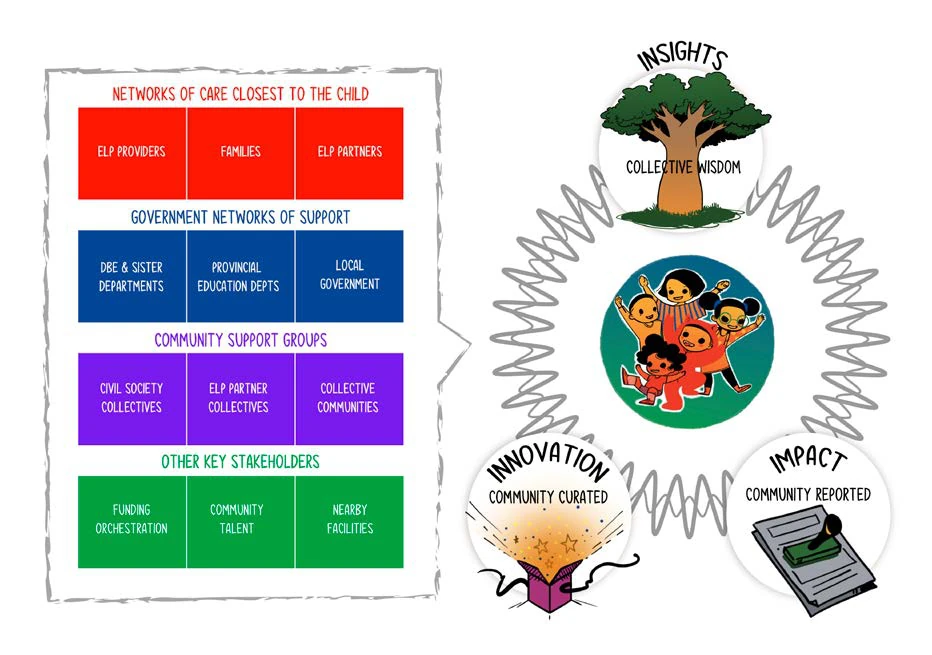
These voices provide essential, ongoing signals about what is working, where friction exists and what needs to change. Such widespread listening cannot be passive or sporadic, it must be active, deliberate and lead to action. We need to ask the right questions, capture honest answers, learn from the data and most importantly, act on what is heard. This is how we close the gap between policy and practice, national direction and local experience, aspiration and lived reality.
BLUEPRINT ACTIONS AT A GLANCE
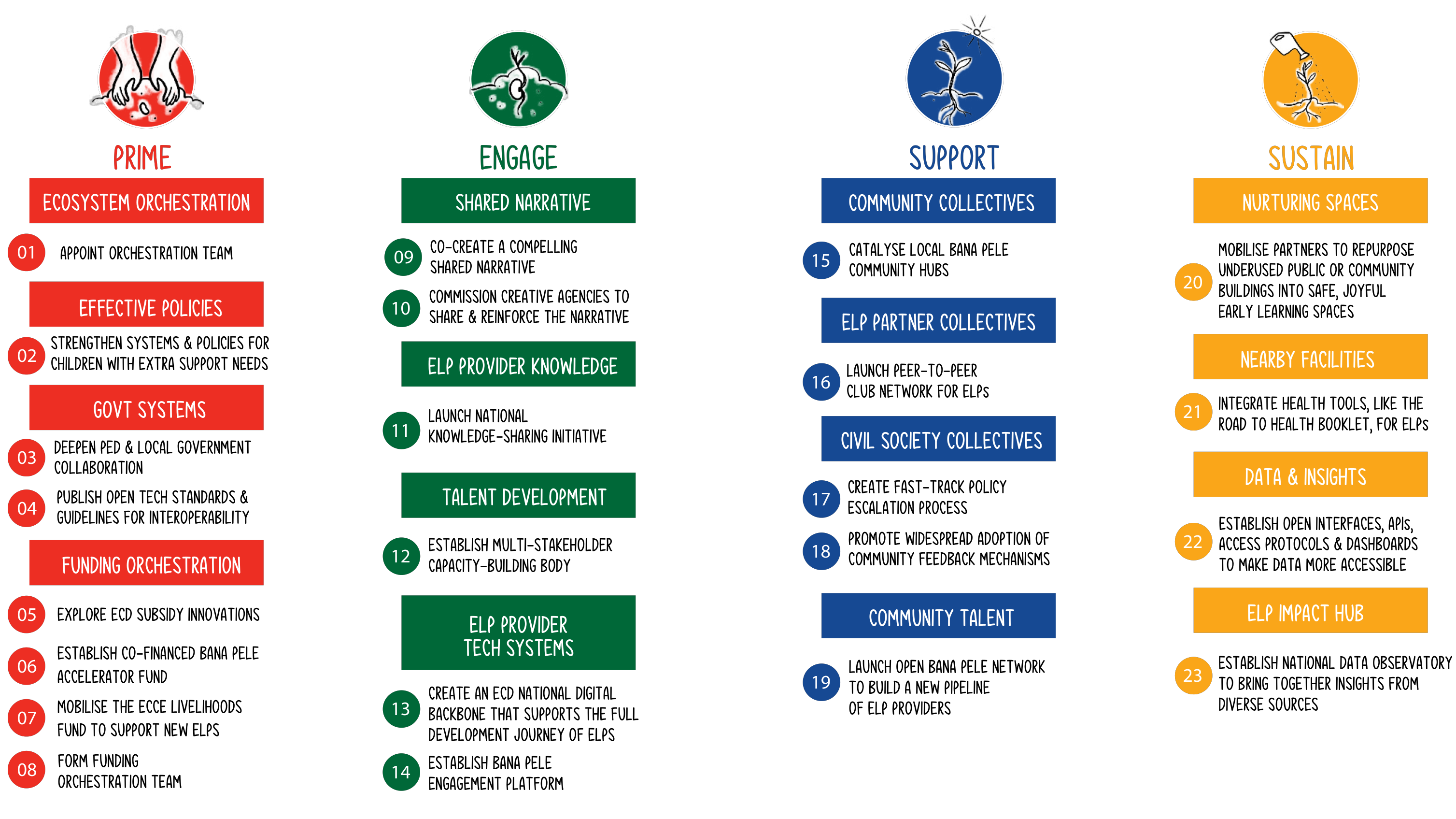
The ELP Impact Hub will guide and support this process by developing the tools, processes and support systems needed for meaningful listening and response. Four core actions will drive this stage:
- Identify Key Assumptions: The Blueprint is based on the assumption that these actions will drive progress and generate real value for all ecosystem actors. These assumptions must be clearly identified, monitored and revisited, so the system can respond and adapt if outcomes diverge from expectations.
- Ask Meaningful Questions: Good listening starts with good questions. Based on the identified assumptions, we must design questions that capture both facts and experiences across all nine actor groups. This includes open-ended, reflective questions that go beyond simple yes/no answers to surface nuanced, qualitative insights, especially from voices historically excluded from decision-making.
- Use Accessible Listening Channels: To gather meaningful feedback across the ecosystem, multiple channels that are accessible and context-appropriate must be used:
- Self-service platforms: Online surveys, mobile apps and digital forms
- Assisted platforms: WhatsApp, call centres and voice notes
- Offline methods: Focus groups, mentoring sessions and community dialogues
- Event-based capture: Workshops, site visits and convenings
Responses should be captured in the format most natural to respondents, whether written, spoken or audio-recorded and in their own languages.
- Make Sense of the Voices, and Act: Given the volume and diversity of feedback, digital tools, particularly AI-enabled platforms, will help organise and analyse responses, while identifying trends and emerging themes. The ELP Impact Hub will lead this synthesis, transforming insights into concrete action. Crucially, feedback loops must be closed, sharing back what was heard, what is being done and what is improving. This transparency builds trust, ownership and shared momentum.
This ongoing cycle of listening, learning, acting and improving will help the ecosystem grow in step with the needs of children, families and ELP providers. It ensures that transformation is dynamic, not static, and that every actor has a role in shaping and strengthening the system. The next chapter explores how these integrated actions deepen capabilities and accelerate impact for all actors in the ecosystem.
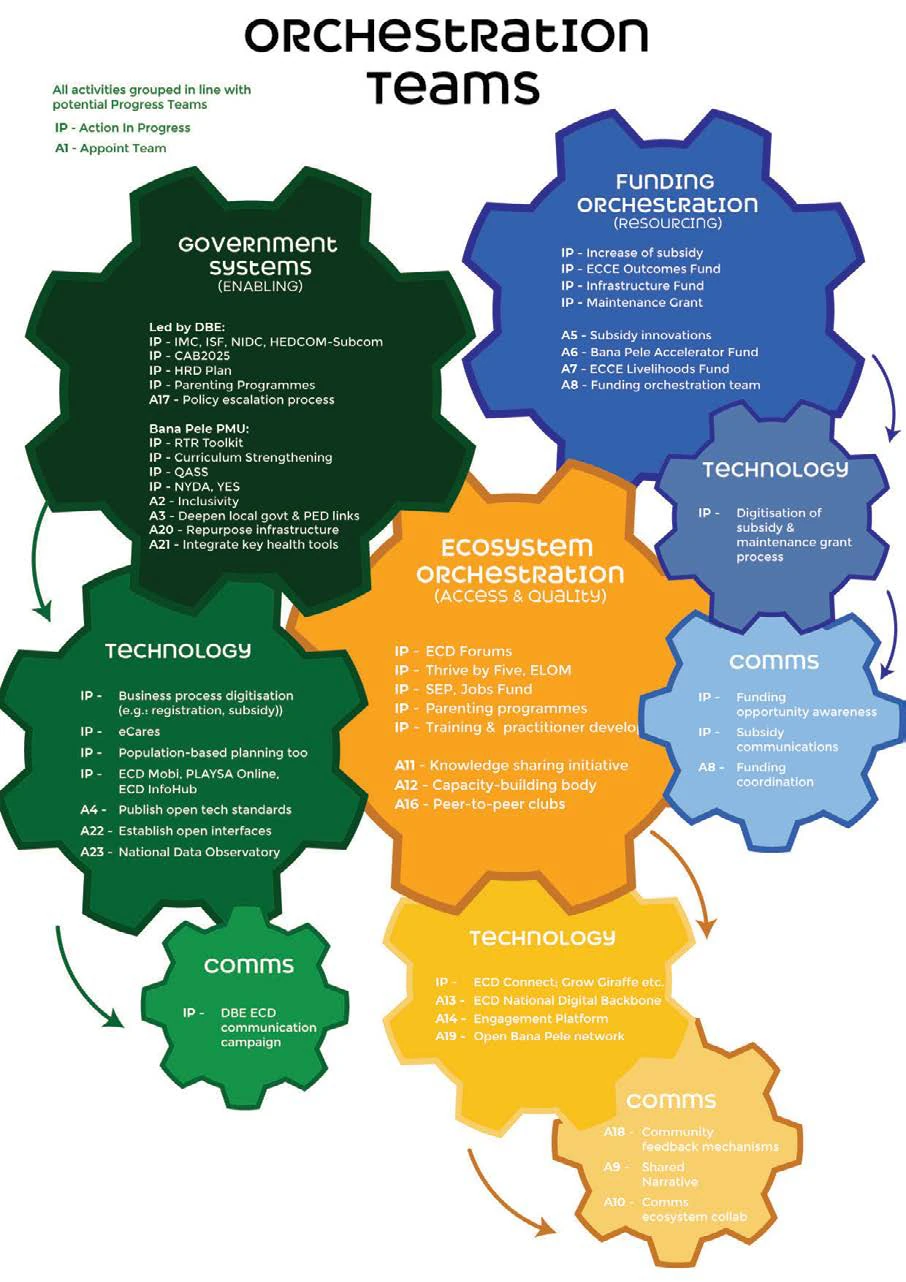
4.6HOW ORCHESTRATION WILL WORK
Orchestration is like conducting a symphony, each player maintains their independence, but conductors (the orchestration teams) ensure everyone plays in harmony toward a shared outcome. These teams do not replace existing roles. Instead, they align efforts, strengthen coordination and unlock progress through collaboration, shared standards and continuous learning.
During the Bana Pele Leadership Summit, stakeholders identified four system-wide priorities:
- Increasing access to quality early learning programmes
- Improving quality of existing programmes
- Creating enabling government systems
- Ensuring sufficient resources
To drive progress on these priorities, three orchestration teams will coordinate the implementation of Blueprint actions. Each team will work with action leads to develop detailed implementation plans.
1. GOVERNMENT SYSTEMS STRENGTHENING TEAM
This team, led by the Bana Pele PMU, focuses on building the public sector foundations needed to deliver at scale by:
- Strengthening execution and coordination with PEDs to align implementation across provinces through the establishment of Bana Pele Provincial Programme Management Units (PPMUs).
- Digitising key processes through eCARES (registration, subsidies, infrastructure, quality assurance), which will reduce red tape for ELPs and ease the bureaucratic load for district officials.
- Strengthening relationships between local government and education districts to reduce regulatory barriers and create enabling conditions for ELPS, especially in under-resourced communities.
- Improving quality delivery through the Quality Assurance and Support System (QASS). The DBE will also roll out a standardised curriculum implementation strengthening toolkit with a mixed-modality training programme, supported by current initiatives such as PLAYSA and ECD Mobi. Quality will be further enhanced through the implementation of the Human Resources Development Plan driven by the Capacity Building Commission.
- Integrating health and development support by establishing systems to ensure key health services are provided to children at ELPs, and equipping practitioners to identify and assist children who are not developmentally on track.
- Enabling knowledge sharing by publishing open data standards and establishing a National Data Observatory, drawing on tools such as the ELOM evaluations, the Thrive by Five Index and the eCares system.
2. FUNDING ORCHESTRATION TEAM
This team coordinates and steers investment across the funding stack required to both accelerate new quality access and sustain the ecosystem by:
- Ensuring a thriving and sustainable ecosystem through the ECD Subsidy and infrastructure allocations via the Conditional Grant. The DBE and National Treasury will work to progressively increase funding in line with sector growth.
- Enabling safe spaces and registration of ELP sites by establishing a private sector Infrastructure Fund in partnership with donors, partners and philanthropists to co-ordinate infrastructure investment through registration data.
- Accelerating new quality access through the Bana Pele Accelerator Fund via a public-private partnership between the DBE, National Treasury, donors and the private sector. This will build on lessons learned from the ECCE Outcomes Fund.
- Incentivising new growth through an ECCE Livelihoods Fund that offers start-up and early-stage capital to prospective ELP providers in high-priority, low access districts. This will attract partnerships from public and private funders focused on youth livelihoods and strengthening township economies.
3. ECOSYSTEM ORCHESTRATION TEAM
This team unifies the ecosystem, ensuring alignment, forward momentum and the removal of obstacles to growth by:
- Strengthening the Network of Care by creating knowledge-sharing platforms where ecosystem actors can share proven practices.
- Unifying ELP Partners such as ECD Forums, NGOs and RTOs to bolster practitioner support.
- Leveraging community assets by catalysing the creation of Community Hubs as local nodes of assistance for ELPs.
- Strengthening local ELP provider collaboration by establishing peer-to-peer networks for practitioner learning, mentorship and collaboration.
- Leveraging existing data systems to generate insights that drive scale.
SHARED PRACTICES ACROSS TEAMS
All three teams will work together on:
- Listening to communities and practitioners through structured feedback mechanisms.
- Developing and implementing the shared narrative to build a national movement around early learning.
- Embedding the shared narrative in communities through ongoing engagement.
- Leveraging technological and data innovations to bring additional efficiencies.
Each orchestration team brings together the right mix of government, civil society and private sector partners to drive coordinated action. Rather than working in isolation, these teams create the alignment and momentum needed to reach every child by 2030. The 23 priority actions outlined in this chapter detail the specific work these teams will coordinate.
THE THREE ORCHESTRATION TEAMS